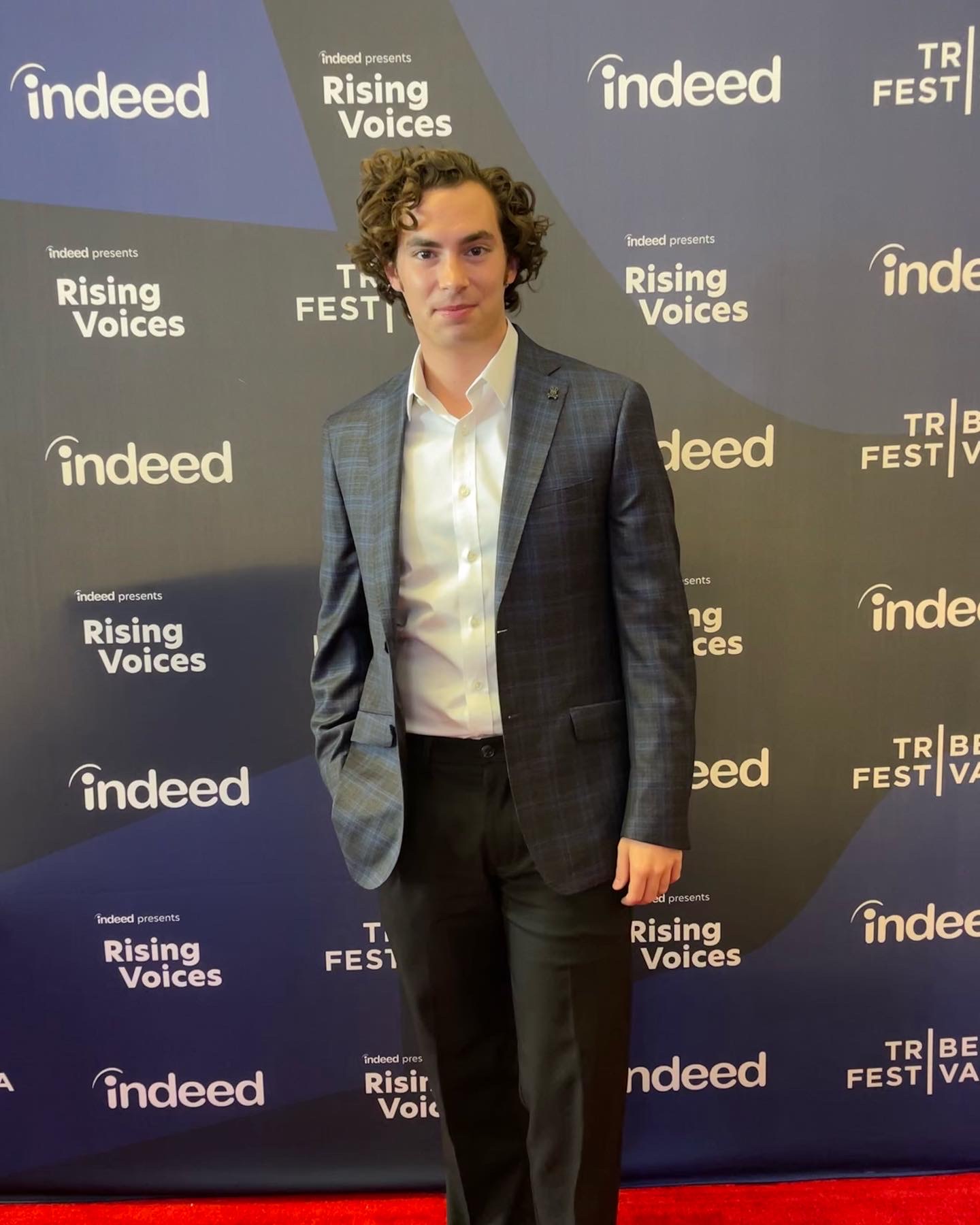
Obsession Made Two Stars. Why Do You Only See One of Them?
I used to put every single egg in the audition basket.:
Auditions showed up, I booked some of them, and I told myself that was a career. Honestly, I was lollygagging. Because here's what took me embarrassingly long to admit: the things you get cast in are rarely your best showcase. Four or five lines, your family watches, and goes… oh. That's it?
I've since changed my mind completely about how an actor actually gets seen at a higher level. And the cleanest proof I've ever seen of it is sitting inside one movie: Obsession.
One film. Two breakout leads. Same tiny paychecks. A month after it crossed $400 million, Inde Navarrette is everywhere — your feed, the trade papers, reported meetings with Michael Mann and Marvel. And Michael Johnston, who played Bear, the lead of the movie? You've probably argued about his character and heard almost nothing about him.
Both of these actors are winning right now. Only one of them is doing it where you can watch. Let me show you the machinery — because it explains how fame actually works, and what it means for anyone trying to get noticed.
You see Inde Navarrette everywhere and barely hear about Michael Johnston not because one is more talented, but because their performances travel differently. Inde plays the horror of the movie — her scariest beats are visual, shocking, and complete in fifteen seconds, so they clip. Every platform grabs them, strangers repost them, and each clip is a free ad with her face on it. Johnston plays Bear, the slow-burn lead — his performance is the spine of the film and only lands if you watch the whole thing. You can't clip two hours of descent into fifteen seconds. So her rise is loud (virality is public by definition) and his is quiet (relationships are private by definition). Both are compounding. The full ladder of how an actor rises: clips get you seen, relationships get you hired, and ownership — making your own work — gets you paid.
Who This Is For
Anyone who's ever watched a movie blow up and assumed the person on their feed was the only one who "made it." And especially any actor who's quietly panicking that they're invisible because they're not going viral.
If you've ever felt like you have to become an influencer to have an acting career — read this before you spend one more night comparing your feed to someone else's.
My Honest Take
Quiet does not mean losing.
That's the sentence I wish someone had tattooed on me early. I spent years believing that if the win wasn't visible, it wasn't happening. It's the same lie that makes an actor feel like a failure because their booking was four lines instead of a magazine cover.
Michael Johnston is having a phenomenal year. He's the lead of the most profitable movie of the moment. The Oscar-buzz conversation includes his performance — he's called the buzz "crazy" himself. He's inside the inner circle of one of the most in-demand young directors working, and he's said he'd jump to work with him again. None of that is on your For You page. All of it is real.
His rise just happens where you can't see it. And once you understand why, you stop measuring your own career by the wrong scoreboard.
The Industry Pattern Behind the Problem — The Clip Economy
Think about how you actually experienced Obsession this summer. Even if you never bought a ticket, you've seen her. Freaky Nikki staring through a doorway. Fifteen seconds of pure nightmare autoplaying between two other videos.
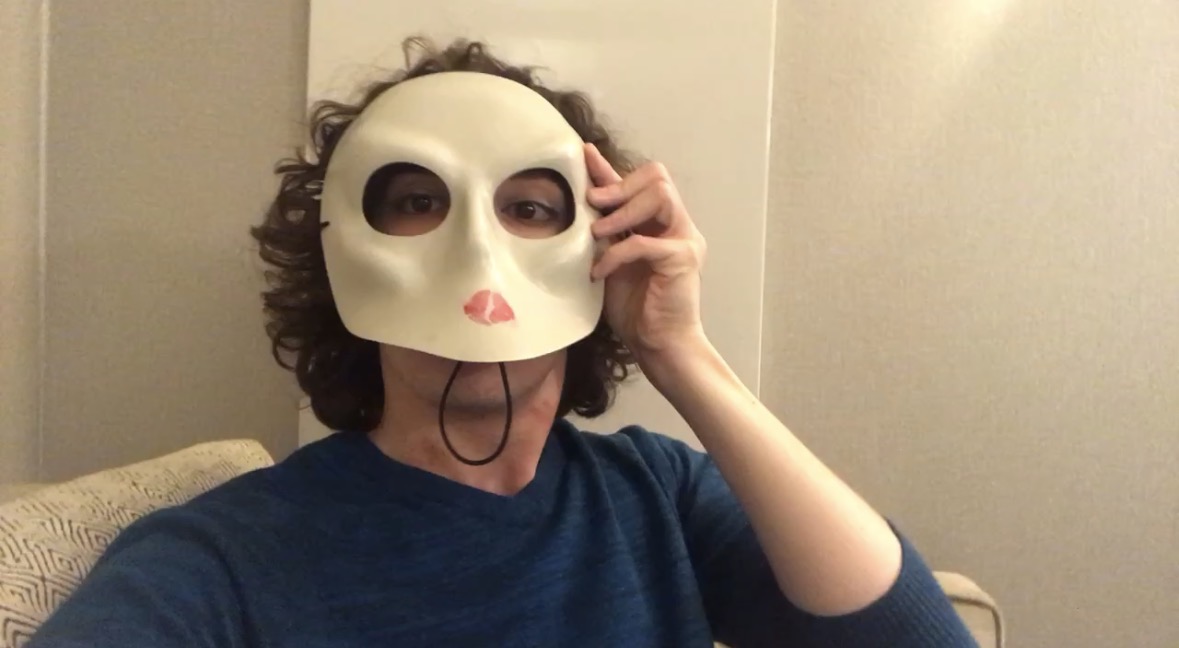
That's the benefit of playing the horror of a movie. Inde's performance clips. The scariest beats are visual, shocking, and complete in fifteen seconds — you don't need context to feel them. So the algorithm grabs them, strangers repost them, and each clip is a free advertisement with her face on it. Millions who never saw the movie still know that face. Eyeballs compound into recognition, recognition into headlines, headlines into meeting rooms.
Now try to clip Bear. You can't — and it's not because Johnston's performance is weaker. It's because his performance is the SPINE of the movie. Bear is a slow burn: a lonely guy making one bad decision after another, and the horror of him only lands if you've watched the whole descent. Fifteen seconds of Bear is a guy talking. Two hours of Bear is the reason the movie works.
So her performance travels as video. His travels as conversation — people arguing about the character in comment sections. And here's the catch: arguments spread the CHARACTER's name, clips spread the ACTOR's face. Everyone knows Bear. Fewer people could pick Michael Johnston out of a lineup.
Why Actors Get Pulled Into This
Because virality is the only kind of success you can watch happen.
Casting offices, directors, and producers don't discover actors through viral clips — they watch the work. Relationship-heat converts quietly: conversations happen in rooms, deals develop for months, and the public only finds out at the announcement.
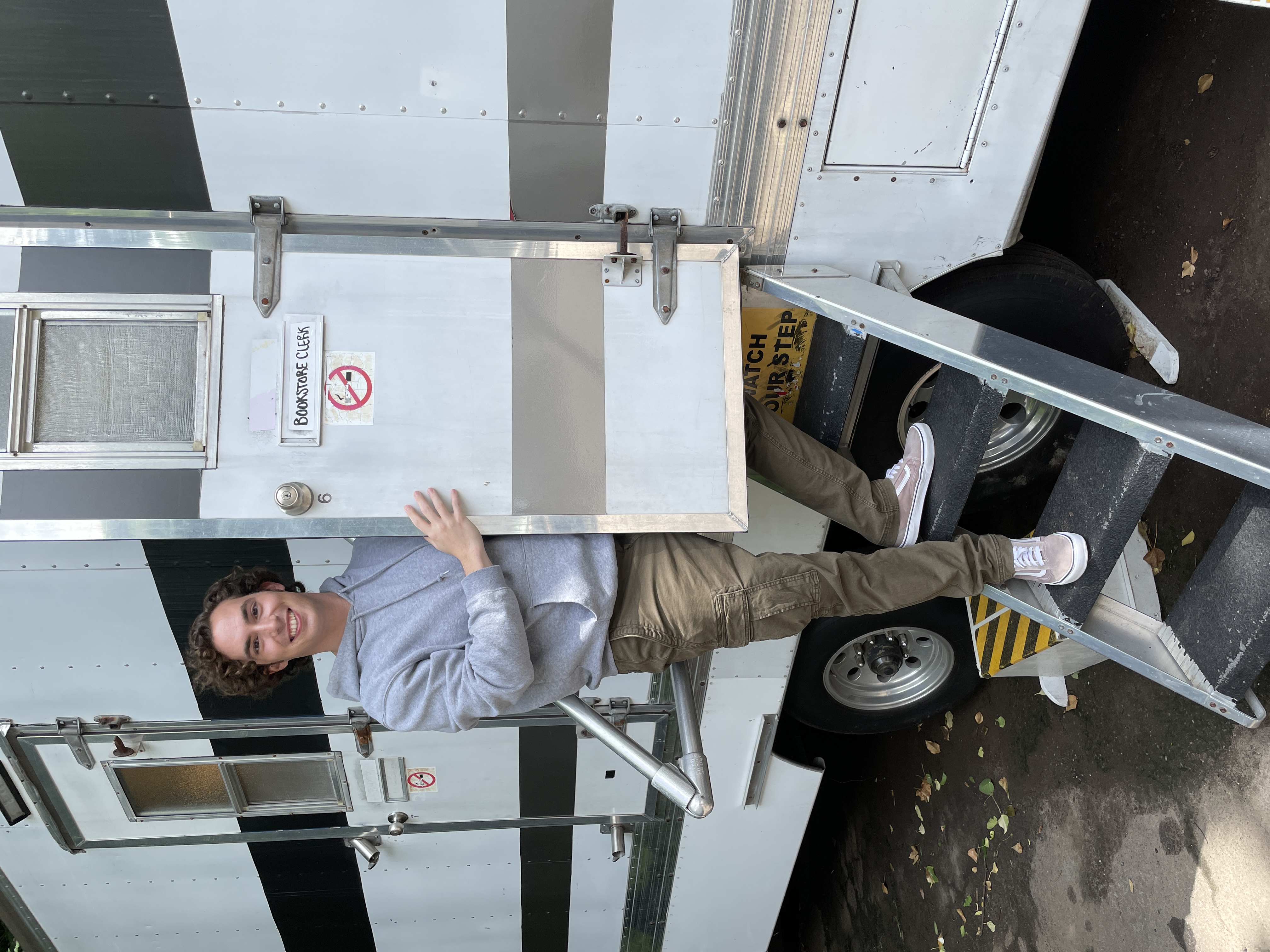
So a whole generation of actors is out here treating "going viral" as the definition of making it — and quietly falling apart because their real, working, relationship-built career doesn't produce a highlight reel for strangers. Her rise is loud because it's public. His is quiet because it's private. You're just only able to watch one of them happen.
I felt this pressure myself when I restarted posting online. Two of my videos popped off recently and actually brought new actors into my world — which was wonderful. But if I'd measured my whole career by which posts went viral, I'd have missed the fact that the most important things this year happened on sets, in rooms, in conversations nobody clapped for online.
What I Believe Instead — The Third Lane
Here's the part Michael Johnston dropped almost as a throwaway line. Talking about his castmates, he said: maybe one day we end up writing our own part together.
That is the most sophisticated sentence anyone attached to that movie said. Because clips and relationships share one limitation — in both lanes, someone ELSE decides when you rise. The algorithm decides what goes viral. The industry decides when a deal closes. The third lane is the only one you control: create the thing yourself. Write the part. Build the project with the people from the last hit. And the whole Obsession universe already proves it works — the movie exists because a director stopped waiting for permission and made his own proof.
[Inline photo: hero already established — the Tribeca festival short-film moment is the "ownership" image]
This is the exact thing I changed my mind about. I used to wait for auditions and call it strategy. Now I know that to be seen at a higher caliber, you usually have to MAKE the higher-caliber proof yourself. The audition basket is one basket. It shouldn't be the only one.
The Practical Decision Rule
When you feel invisible, ask which lane you're actually neglecting — not which one is loudest.
- If nobody knows your work exists, you have a clips problem (visibility).
- If people know your work but you're not getting hired, you have a relationships problem (being in the right rooms).
- If you're tired of waiting for either, you have a ownership opportunity (make the thing).
Most actors obsess over the first lane because it's the only one they can watch. The career usually gets built in the second and third.
What to Do This Week
- Stop using virality as your scoreboard. The most valuable moves in a career are invisible from the outside. Judge your year by rooms entered and relationships built, not by view counts.
- Pick one relationship lane and show up in it. Casting offices, directors, and producers watch the work — find where the people who cast your kind of role actually gather, and be there.
- Start one thing you own. A scene, a short, a role written for you. You don't need permission. The Obsession director didn't wait for it.
Common Questions People Ask (7 FAQs)
Why is Inde Navarrette more famous than Michael Johnston if they're both leads? (hyper-niche) Because her role produces clippable moments and his doesn't. Her scariest beats are complete in fifteen seconds and require no context, so the algorithm spreads her face for free. His performance only lands across the full runtime, so it travels as conversation about the character, not clips of the actor. Same movie, same budget, two completely different launch mechanics. What does "self-producing" mean for an actor and is it worth it? (hyper-niche) Self-producing means creating your own project and role instead of only auditioning for others. It's worth it because it's the one lane you fully control — you're not waiting on an algorithm or a casting decision. It's also usually how an actor generates a higher-caliber showcase than a four-line guest spot ever will. How do actors get noticed by casting directors without social media? (hyper-niche) By being in the rooms where casting people actually watch work — festivals, workshops, panels, intensives, and consistent quality auditions that build memory over time. Casting doesn't discover actors through viral clips; they watch the work and remember the names. Social media can support that, but it doesn't replace it.
Final Takeaway
So the next time a movie blows up, don't just watch the star on your feed. Look for the second one — the one whose rise you can't see. Loud fame is the trailer. Quiet fame is often the career.
I spent too long putting every egg in the one basket I could watch. The lane that actually changed how I think isn't clips and it isn't even relationships — it's ownership. Making the thing. Because clips get you seen, relationships get you hired, and the work you own is the only proof nobody can decide to ignore.
You can keep measuring yourself by the scoreboard everyone can see, and feel like you're losing every week you don't go viral. Or you can build in the two quiet lanes and make your own proof — and let the visible stuff show up whenever it feels like it.
One of those is a feed. The other one is a career.