How Much Did Inde Navarrette Make From Obsession? The Real Payday Isn't the Movie
Here's something I learned the expensive way:
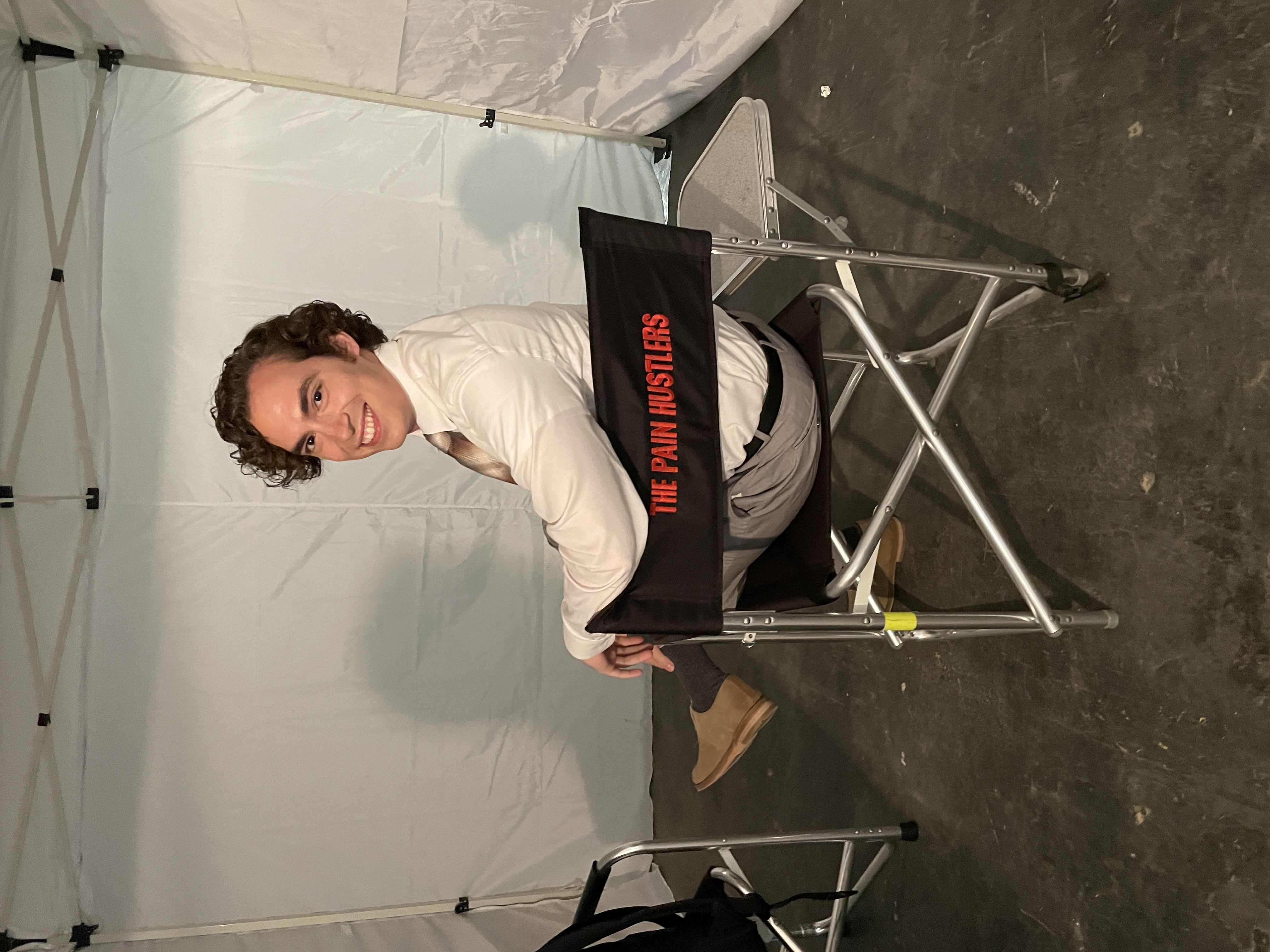
I once sat on a Netflix set in a chair with the show's name printed across the back of it. Real production. Real streaming release. And that week, the chair felt like it was worth more than the check.
I'm not complaining. That's just the part of acting nobody explains to you before you're in it. The size of the project and the size of the paycheck are two completely different numbers, and they almost never show up at the same time.
Which brings me to Inde Navarrette. Her horror movie Obsession has now crossed $450 million worldwide, and a rumor leaked that she was paid around $20,000 to lead it. The internet lost its mind. "How is that legal?" "She got robbed."
Here's the reframe most people are missing: the $20,000 isn't the scandal. And the $400 million was never her payday. Let me show you what actually pays an actor — because it's the same thing that decides what you'll earn for the rest of your career, whether you ever book a movie or not.
Inde Navarrette was reportedly paid around $20,000 to lead Obsession — an unconfirmed rumor, but a believable one. Obsession was made for roughly $750,000, and on a budget that small, the union (SAG-AFTRA) sets a minimum rate called scale that the lead gets paid no matter how good she is. So $20,000 isn't a robbery — it's the system working as designed. The movie crossing $400 million didn't put another dime in her pocket, because she had no back-end deal (a cut of the profits) written into that contract. But it did something more valuable: it reset her quote — the number her team can now ask for on the next project. The real money in an acting career almost never comes from the breakout check. It comes from what your team converts that breakout into next.
Who This Applies To
This one's for anyone who watches a movie blow up and assumes the actors got rich — and especially for actors who are trying to understand how the money in this career actually flows before they bet their life on it.
If you've ever seen a streaming credit on someone's resume and thought "okay, they're set now," keep reading. Because the gap between "famous" and "paid" is one of the most misunderstood things in this entire industry, and Inde's story is the cleanest example I've seen in years.
My Honest Take
Fame and money do not arrive together. They arrive years apart.
That's not a sad fact. It's just the actual physics of this business, and once you see it, the $20,000 rumor stops looking like a headline and starts looking like a textbook.
I've lived the small end of this and the bigger end of it. Early on, my first real union work paid almost nothing — and then, years later, a streaming paycheck landed that genuinely changed my life. Same actor. Wildly different numbers. The only thing that moved in between was what the industry believed I could do.
So when I watch people scream that Inde got robbed, I get it. But they're arguing about a check she cashed two years ago. The interesting money is the money that hasn't been negotiated yet.
The Industry Pattern Behind the Problem
Here's a thing nobody teaches you before you're standing on a set.
When a movie is made for very little money, the cast gets paid scale — the union minimum for a day or a week of work. Producers can always pay more. They can never legally pay less. On a $750,000 movie, there's simply no room to pay a lead like a movie star, because the whole movie cost less than a single week on a studio film.
So the budget that made Inde famous is the exact same budget that guaranteed she couldn't get rich off it. The thing that gave her the platform is the thing that capped the check.
And the profits? A movie crossing $400 million only pays the actor if that actor negotiated back-end — points, a written-in percentage of the profits. On a tiny indie made before anyone knew her name, a first-time-level lead has close to zero leverage to ask for that. So the money went up. Hers didn't.
Why Actors Get Pulled Into the Wrong Story
Because the visible number is always the loud one.
$400 million is a headline. $20,000 is a headline. The number that actually matters doesn't trend, because it hasn't happened yet — it's the next deal.
There's also a comforting lie buried in the outrage: that if the movie just paid her fairly, she'd be set. But a one-time check, even a big one, isn't a career. Actors who get one great payday and treat it like the finish line are the ones you never hear from again. The money in this business isn't a moment. It's a slope.
I almost fell for the moment-version of this myself. When my own streaming check landed, the temptation was to treat it as the arrival. What it actually was, was fuel — mental breathing room that let me build the next thing while the industry decided what to do with me.
What I Believe Instead
The real story of Inde Navarrette isn't the $20,000. It's the rooms she's reportedly sitting in right now.
According to The Hollywood Reporter, Inde has taken meetings with Jake Schreier — the director attached to Marvel's new X-Men movie — and with Michael Mann, who's casting Heat 2. When Nylon asked her point-blank if she'd do a Marvel movie, her answer was two words: "I would."

Here's what those meetings actually are. When a breakout takes a "general" — a get-to-know-you meeting with a director, no specific role attached — every one of those does something invisible: it sets her market. Look at the pattern of who she's meeting. A Marvel franchise director and Michael Mann in the same news cycle tells every studio in town what shelf she's on now.
Two years ago, her reps were fighting to get her seen. Today, directors with hundred-million-dollar movies are taking the meeting. Nothing about her talent changed in those two years. The movie just gave the industry permission to see what was already there.
And this time — because her team can prove she carried the most profitable movie dollar-for-dollar in recent memory — they can finally ask for the thing she had zero leverage to ask for last time: back-end. Points. A slice of the next hit, written into the deal.
The Practical Decision Rule
If you want to know whether a role or a project is going to pay you or price you, ask one question: what does this let me ask for next?
Sometimes the answer is money now — take it. But sometimes the answer is a credit, a relationship, or a level-jump that resets your quote — and that can be worth more than the check attached to it. The actors who build wealth aren't the ones chasing the biggest single number. They're the ones reading every job as an investment in the next negotiation.
Think of it the way a founder thinks. You're not an employee applying for a paycheck. You're an entrepreneur putting seed money — your time, your tape, your yes — into a business you own, betting it compounds.
What to Do This Week
Three moves, whether you're an actor or just someone who wants to understand how this works:
- Separate "famous" from "paid" in your head. Next time a movie pops off, ask who negotiated back-end and who didn't. That single question explains 90% of who gets wealthy and who just gets recognized.
- If you're acting — find out your own quote. What did your last comparable job pay? That's your current floor. Knowing it is the first step to moving it.
- Stop optimizing for the check. Start optimizing for the level. A bigger credit resets the floor. The real career question was never "how do I get paid more for this job" — it's "how do I get into the rooms where the next tier of jobs is cast."
Common Questions People Ask (7 FAQs)
Does a viral hit automatically make an actor rich? (hyper-niche) No. A viral hit makes an actor findable — it changes which rooms they can get into and what their team can ask for next. The wealth, if it comes, is built in the deals that follow the hit, not in the hit itself. Plenty of actors have a breakout credit and a modest bank account at the same time. Why do lead actors in low-budget movies get paid so little? (hyper-niche) Because pay scales with budget. The union sets a minimum (scale) that slides with the size of the production. On a micro-budget film, even the lead is paid close to that floor, because there's no money in the budget to pay anyone like a star. The budget that gives an unknown actor a shot at a lead is the same budget that keeps the check small. What would it take for Inde Navarrette's next movie to pay her millions? (hyper-niche) Two things her team is likely working on right now: a reset quote (proving the old TV-actor rate is dead by pointing to Obsession's numbers) and back-end points on her next big project. Her next movie, Invertigo, was signed before Obsession blew up — so it was almost certainly priced off her old rate. The "new her" gets paid on the deals she signs from here.
Final Takeaway
So here's the real story now that the whole internet is arguing about $20,000.
The $400 million was never Inde's payday. It was her audition — for the rooms she's sitting in this week. The movie didn't pay her. It priced her. And the deals she signs over the next year and a half will decide whether Obsession becomes the start of a career or the story she's known for.
You can watch this business the way most people do — screaming about the check on the screen, the number that already happened. Or you can learn to watch the invisible number: the quote, the leverage, the next deal that nobody's covering because it hasn't been signed yet.
One of those is entertainment. The other one is how the money actually works.
That's the part worth understanding.