
Should I Move to LA, NYC, or Atlanta for Acting?
You're standing at the same fork almost every serious actor hits: stay where you are and wonder if you're capping yourself, or move to a "real" market and hope the auditions follow.
And the internet is no help. Half the advice screams "you HAVE to be in LA." The other half says "the industry's remote now, moving is pointless." Both are selling you certainty they don't have.
I moved to LA. My first year, I got zero auditions. Not a few — zero. So let me give you the version nobody posts: when moving actually helps, when it's a very expensive mistake, and exactly what I'd have ready before I packed a single box.
There's no city that will hand you a career, and moving is not what unlocks auditions — I moved to LA and got zero auditions for a full year to prove that the hard way. Move when you already have your materials, a stable income source you can transplant, and a plan for building relationships once you land. Don't move to "get discovered" or to escape feeling stuck; a new zip code doesn't fix an unclear type or a passive strategy. Broad strokes: LA has the most volume but the highest cost and a car-dependent, spread-out grind. NYC is theater-and-commercial rich but brutal on rent. Atlanta is a genuine production hub with a lower cost of living and real local-hire opportunity — I've booked at the Netflix level from the Atlanta market. And thanks to self-tapes, you can often build proof and get seen from a smaller market first. The right city is the one that matches your current stage — not the one with the best mythology.
Who This Market Is Best For (Quick Map)
| Los Angeles | Most on-camera volume; film/TV/commercial; actors ready for a spread-out, self-driven grind | Highest cost; car basically required; easy to feel invisible in the "NoHo actor bubble" |
|---|---|---|
| New York City | Theater, commercial, and on-camera; actors who thrive on density and public transit | Rent is punishing; the "40x rent / 80x guarantor" gauntlet renters describe |
| Atlanta | Growing film/TV hub; strong local-hire and lower cost of living; beginners who want real sets without coastal rent | Local-hire rules and reel/resume expectations to understand first |
| Toronto / Chicago | Toronto = big Canadian/service-production hub (ACTRA); Chicago = strong theater + on-camera, very livable | Toronto union/immigration questions; Chicago's theater-vs-on-camera divide |
|---|---|---|
Use this as a starting map, not gospel. The deeper question is under it.
What Beginners Misunderstand About Moving
The core myth: proximity equals opportunity. Move to LA, be near the studios, and the auditions start.
They don't. My first year in LA I was doing everything "right" — big market, submitting through reps, taping every non-union short I could find. Zero converted. Proximity did nothing, because I was still waiting to be chosen instead of building.

Here's the reframe that matters more than any city comparison: what flipped my year wasn't the location. It was building a research engine — pulling every show casting at the level I wanted, finding the casting directors attached, and getting into the workshops and events those CDs were actually teaching, so I had a relationship before the submission. That works in LA. It also works in Atlanta, Chicago, or from your bedroom with a self-tape setup. The move that actually changes your auditions is upstream of your zip code.
And romanticizing the big market is its own trap. "I just need to be in LA to be taken seriously" is the same LA-coded, well-rounded thinking that gets actors to blur their type to fit everything. Being there isn't a strategy. Having a specific, castable lane and the relationships to get seen in it — that's the strategy, in any city.
The Real Cost and Risk Factors
This is where moving quietly wrecks careers, and nobody wants to say it plainly: acting income is delayed and unstable by design. The industry has effectively shut down twice in the last few years. If you move to an expensive market with acting as your only income, you are structurally fragile no matter how talented you are.
So the money reality isn't "can I afford the flight." It's:
- Can I cover rent + life for a long runway — months, not weeks — without acting income?
- Can my income source come with me or run remotely? A job or skill that pays and travels is worth more than proximity to a studio.
- What does the market's baseline cost actually look like? In LA, factor a car and its true monthly cost. In NYC, factor the rent-qualification wall renters describe (commonly the "40x monthly rent, or a guarantor earning 80x" rule). Atlanta and Chicago generally cost less to live in.
A second income isn't a failure flag or a "someday I'll quit it" placeholder. It's the strategy. Mine is literally what funded my acting career through the strike when every check in my pipeline went silent. Move with that, not before it.
Representation and Casting Reality (and the Self-Tape Shift)
A few years ago, "you have to be in the room" was more literal. Now a huge share of auditions are self-tapes, which quietly changed the whole equation: you can build proof and get seen from markets people underestimate.
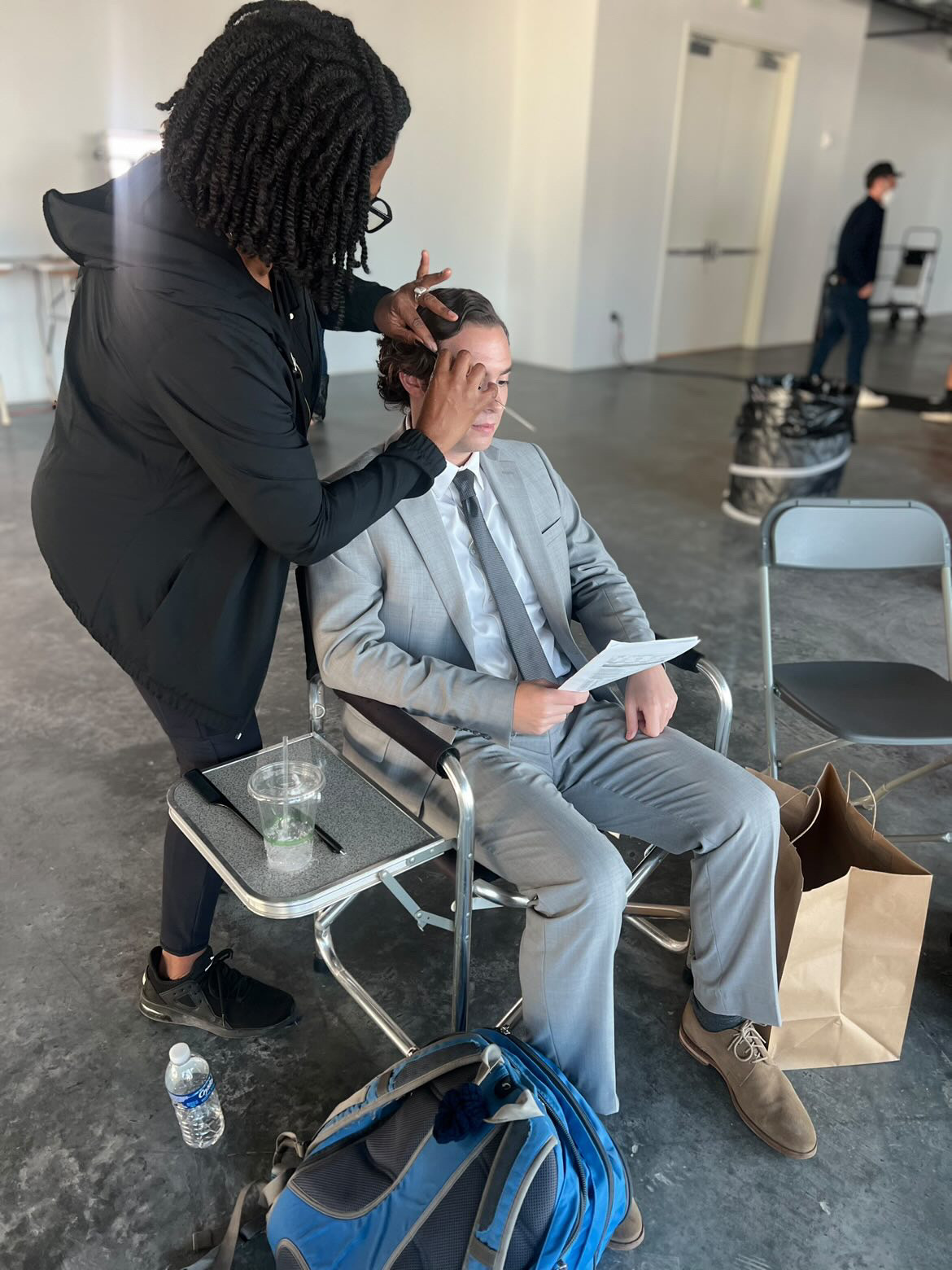
I've booked at the Netflix level from the Atlanta market — a real set, real work, not a permanent LA address. (I wrote the full breakdown in How I Got Cast in a Netflix Movie From the Atlanta Market.) That's not me saying "never move to LA." It's me saying the door isn't only in one city anymore.
There's a bigger shift underneath this, too. The industry is moving from a corporate-employment model toward a small-business one — and in that world, a project made for almost nothing can break out and reset an entire career. You can go from the very bottom to the very top from an unexpected place. That reality rewards actors who build and make their own work over actors who just relocate toward the gatekeepers and wait.
What I'd Do Before I Moved Anywhere
My most-repeated piece of advice, and it applies perfectly here: slow down first — you can always speed it up later. Rushing the move is the expensive mistake. Here's the order I'd actually go in:
- Get your materials right where you are. Clear type, current headshots, at least one strong piece of footage. If your package isn't ready, a new city just watches you struggle at higher rent.
- Lock a transplantable income source. Something that funds your life and your acting investments in the new market. This is the difference between a runway and a countdown.
- Build the local room before you're local. Start the research engine now — who casts what you want in that market, which CDs teach there, what the community looks like. When I moved to Ohio as a kid, I walked into community theater and found my people on day one. Find that room in your target city before the lease.
- Pressure-test with self-tapes first. Are you even booking or advancing from where you are now? If self-taped auditions aren't converting locally, moving won't fix the tape — it'll just relocate the problem.
A Market Decision Checklist for Actors
Only move when you can check most of these:
- [ ] My materials are ready (type, headshots, at least one strong footage piece).
- [ ] I have a stable income source that transfers to the new market.
- [ ] I have several months of living expenses saved, independent of acting.
- [ ] I've researched who casts my type in that market and where they teach/appear.
- [ ] I'm moving toward a plan, not away from feeling stuck.
- [ ] I've honestly asked whether I could build the next stage from where I am first (self-tapes, local credits, relationships).
If most of these are blank, the answer isn't "which city." It's "not yet — build first."
Common Questions Actors Ask (FAQs)
Should I move to LA for acting? (primary) Move to LA when your materials are ready, your income transfers, and you have a runway plus a relationship plan — not to "get discovered." LA has the most volume but the highest cost and a car-dependent grind. I moved there and got zero auditions my first year, which taught me the location was never the lever. Build first, then move toward a plan. Can I be an actor without moving to LA? (hyper-niche) Yes. Self-tapes let you build proof and get seen from smaller markets, and hubs like Atlanta offer real local-hire work. I've booked at the Netflix level from the Atlanta market. You may eventually move for volume, but "move to LA or quit" is a false choice. Do I need a car to act in LA if I live in NoHo? (hyper-niche) Realistically, plan on needing a car in LA — the city is spread out and auditions, classes, and self-tape resources aren't clustered in one walkable pocket, even from an actor-heavy area like North Hollywood. Budget for the car as part of the true cost of the market, not an afterthought. Is it worth moving to NYC if most auditions are self-tapes now? (hyper-niche) NYC still has real value for theater, commercial, and on-camera density and community — but if your pull is purely on-camera and it's mostly self-taped, weigh that against NYC's rent reality (the "40x rent / 80x guarantor" wall renters describe). Sometimes the smarter move is building from a cheaper base and visiting for callbacks.
Final Takeaway
No city is going to choose you. LA, NYC, and Atlanta are tools, and a tool only works in ready hands. I moved to the biggest market in the world and it gave me nothing for a year — until I stopped waiting on the location and started building relationships and proof. That would've worked in any of these cities. It would've worked from my bedroom with a decent self-tape setup.
So don't ask "where do I have to move to make it." Ask "what stage am I actually at, and which move — including not moving yet — serves that stage." Get your materials and your money and your rooms right first. Then the city is just logistics.
Slow down first. You can always speed it up later.