
How I Got Cast in a Netflix Movie From the Atlanta Market
It happened to me:
The drive from Nashville to Atlanta was three and a half hours, my agent's voice still in my head from the call two days earlier — "They're pinning you. You're booked." — and I was sitting in the rental car at a red light somewhere in north Georgia thinking, I have no idea how this actually happened to me. But.
I did know. I just didn't want to admit it out loud yet, because the truth was unsexy.
I went to school with people way more gifted than me. Boston University. RADA in London. Conservatory kids who could cry on cue at 14. None of them booked a Netflix movie with Emily Blunt and Chris Evans. I did. And it had absolutely nothing to do with being the best actor in the room.
The same pattern plays out with every actor I work with now. They want to know what the "talent unlock" was. There wasn't one. There were four very boring moves I'd been running for three years, and by the time the Pain Hustlers audition landed in my inbox, the booking was already half-finished.
Atlanta is not a backup market. It's a real one. Between tax incentives and the streaming boom, the Southeast (Atlanta + Nashville) is one of the highest-volume TV and film regions in the country, and a huge share of supporting and recurring work is cast locally — because productions don't want to fly someone in for two days. I booked a Netflix supporting role from the Southeast market by treating it as my primary market, not LA. The booking came from four moves running in parallel: a mentor network I'd built before I had credits, a market-targeting decision to be a Southeast local hire instead of a long-shot LA actor, a habit of leveraging every small credit as a door to the next one, and a research routine I ran before every single audition. None of those looked like "acting." All four are why a casting director from Atlanta knew my name when a David Yates Netflix film came through.
Who This Applies To
This one is for early-career actors — represented or unrepresented — who feel like every booking conversation is happening in LA without them. Especially if you're already living somewhere besides LA or NYC (Atlanta, Nashville, Toronto, Chicago) and you keep being told the "real" market is somewhere else. It also applies if you live in LA but feel like the room you're in is too crowded, and you're starting to suspect there's a different door.
If you've never put your address on a casting profile and wondered if that single field could change what gets submitted to you — keep reading.
My Honest Take
The day I sat in the rental car driving to that Atlanta hotel, I figured something out that I haven't been able to un-know since.
The classmates of mine who hadn't booked something like this weren't worse actors than me. (Most of them were better. Honestly.) They were waiting for the industry to find them. I'd spent three years finding it first.
That's the whole post in one sentence. The rest is just the four specific things I did during those three years.
And listen — I'm not going to pretend any of it was a master plan. Most of it I figured out by accident, by running out of money, by being too embarrassed to keep doing what wasn't working. But once I had all four moves running at the same time, the booking stopped being a question of if. It was just a question of which project.
The Industry Pattern Behind the Problem
Here's a thing nobody teaches you in acting school.
LA and New York cast the leads. Pilots, series regulars, big features — productions are willing to fly you in for those. But the supporting roles, the recurring guest spots, the day-player and co-star work that actually builds your reel? Productions cast that locally. Because they're not paying travel for someone who's on set two days.
Over the last decade, productions started shipping volume out of LA. Atlanta, Nashville, Vancouver, Toronto, Chicago — tax incentives, real estate costs, streaming budgets. The math of where TV and film is physically being made changed. The math of where most actors think it's being made… didn't.
So you have a whole generation of actors moving to LA to compete with everyone in LA for one starter role the productions weren't even casting from there. And in the secondary markets that are actually casting that role? Way smaller pool, way better odds, and almost nobody talking about it. (Awkward.)
Why Actors Get Pulled Into This
Because everything you read about "becoming an actor" is still LA-coded.
Every podcast, every YouTube essay, every actor memoir is calibrated to the LA path. So when you're trying to figure out what to do next, the loudest advice in the room is to pack a car and drive west. The Southeast market doesn't have its own marketing campaign. Atlanta isn't running ads telling you to come hire-out from there.
There's also a status thing nobody likes to say out loud. Being "an LA actor" sounds like more of an answer than being "a Southeast market actor." Even when the second one is the one booking.
I almost fell into it too. After Boston University, I moved straight to LA. No agent. No reel. No idea what I was supposed to be doing. The only thing I had was a sense that I was about to drown in a city full of more-gifted people, and I needed a different angle fast — or I was going to spend three years auditioning for student films and calling that a career.
What I Believe Instead
The four moves. In order, because that's the order they actually have to run in.
Move One — I built a mentor network before I had credits.
I started listening to actor business podcasts. Not for the celebrity interviews. For the methodology of the host — how they thought about the industry, what frameworks they used. After enough hours, I knew exactly which of them I wanted to actually work with.
Then I used my BU alumni network. I cold-emailed actors ten years ahead of me. "You all work. You're in the place I want to be in. Can we get on a call? I just want to understand what you actually do all day." Half of them ignored me. The other half said yes. Those calls reshaped my entire understanding of the LA market in about three months.
Most actors think mentors find you when you're ready. (They don't. You go find them. Years before you're ready.)
Move Two — I worked the market that was actually available to me.
My parents had moved to Nashville while I was at BU, which technically put my home base in the Southeast market — which covers both Nashville AND Atlanta. So I started using their address on my casting profiles. Suddenly I was a local hire in one of the biggest TV and film production regions in the country.
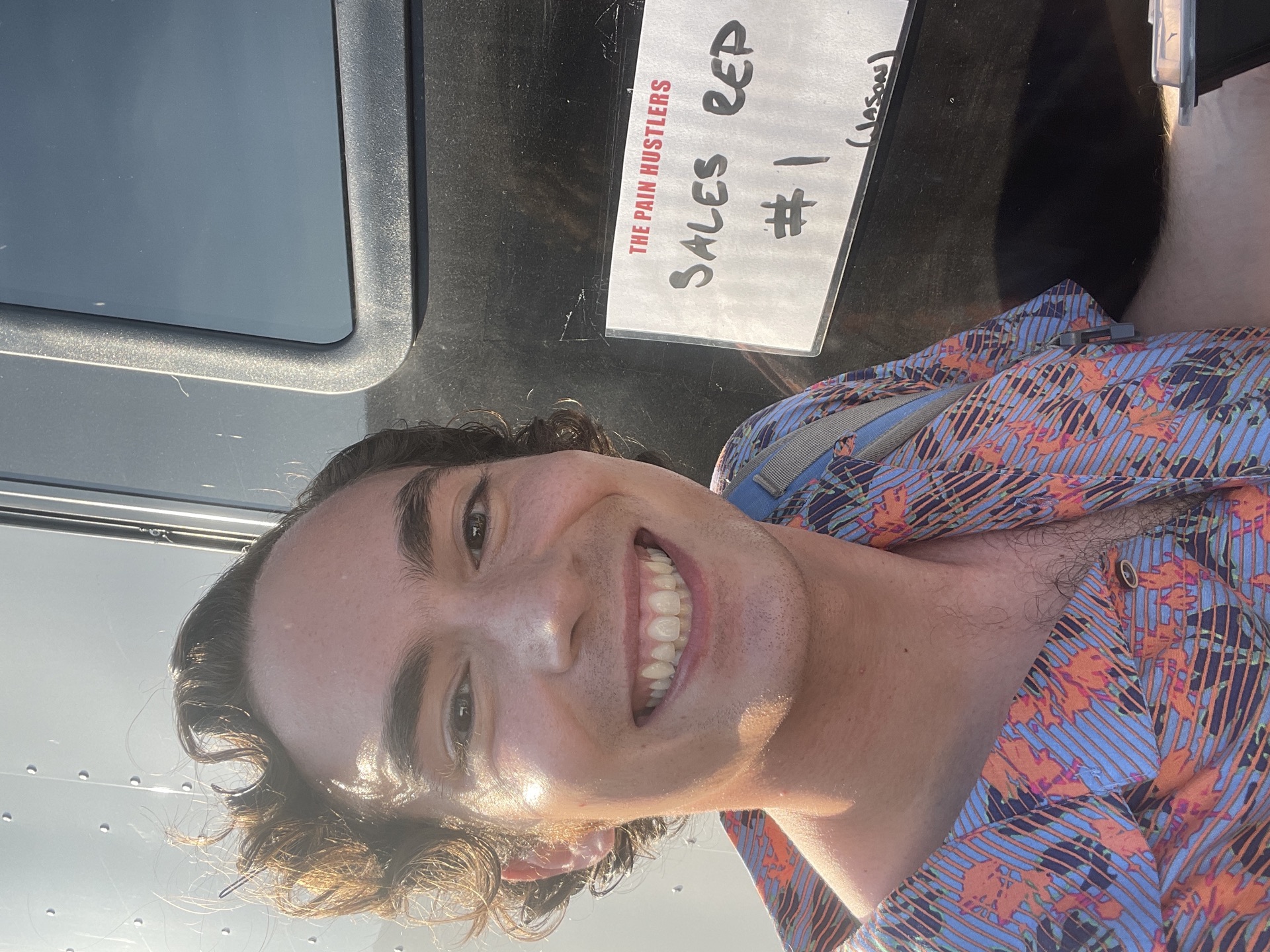
The math: bigger lead roles still got cast out of LA because productions would fly people in. Smaller starter roles — the ones that actually built my reel — got cast locally. I wasn't competing with all of LA for one role anymore. I was competing with a much smaller regional pool for actual on-camera credits.
That single market-targeting move is the one I most regret not making sooner.
Move Three — I used every credit as a lever for the next one.
One of my earliest paid SAG-adjacent jobs was as a stand-in on the Ellen DeGeneres Show. Standing in for an actor during rehearsal so the lighting could be set. (Glamorous, I know.)
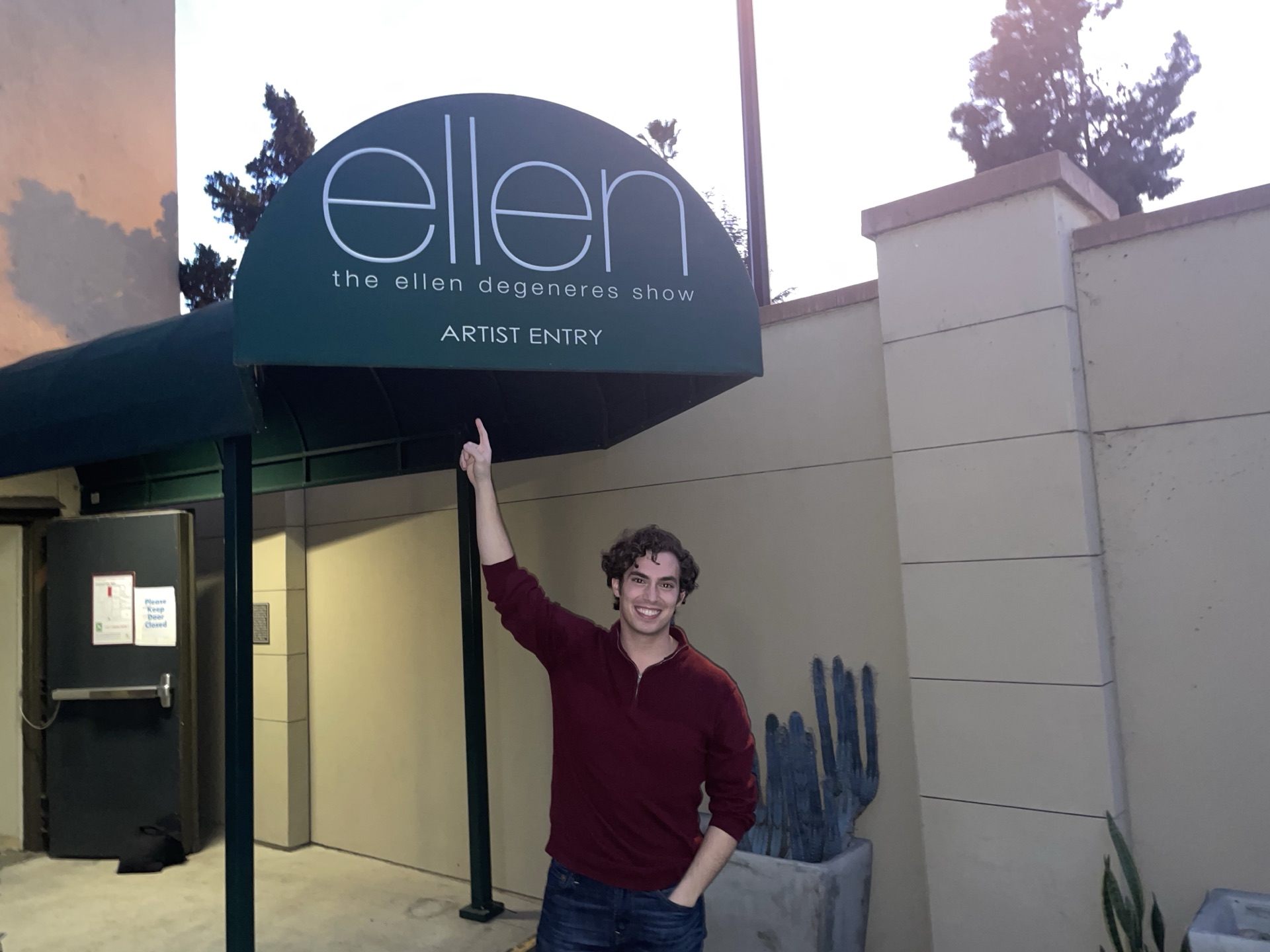
That one segment changed every room I could be in. Casting offices that wouldn't even look at non-union actors suddenly had me on their submission lists. Residual checks started arriving months later when clips circulated online. None of that was the original plan — I took a stand-in gig and the whole trajectory shifted.
Here's the truth. Early jobs aren't résumé bullets. They're doors. The actors who break through aren't the ones collecting jobs. They're the ones stacking them — each one opening the next.
Move Four — I did the invisible work before every single audition.
Before every audition, I ran the same three checks. Show targeting — was this a show I was actually a great fit for, or was I forcing it? Market targeting — was this realistic given where it was casting? Industry context — where does this project sit, who's the showrunner, who's directing, what kind of room is this likely to be?
None of that showed up on camera. Nobody knew I was doing it.
(It was the entire reason every audition I sent was specific. Not generic. Not hopeful. Specific.)
Smart work, not hard work. Every time.
The Practical Decision Rule
If you're trying to figure out whether to put more energy into LA or to start treating a secondary market as your primary one, this is the rule.
Look at the role you want to be booking next — not the dream role, the next-step role. Then look at where it's actually casting.
If it's casting locally and you're not local — you're competing against the whole LA pool for a role they don't want to pay travel on. The math is against you before the audition starts.
If it's a series regular or a lead, you're right to keep LA in the mix. Productions will pay travel for those.
The mistake isn't being in LA. The mistake is being only in LA when the role you're chasing is being cast in Atlanta, Nashville, Toronto, or Vancouver — and not having an address on file in any of those.
(If your parents live in a production market, that's not nothing. Use it.)
What to Do This Week
Three things, in this order:
- Pull up the breakdowns for the last five roles you wanted to be seen for. Look at where each was casting. Were any of them in the Southeast, Toronto, Chicago? If yes, that's your market gap.
- Update your casting profile addresses. If you have a legitimate connection to a production market (family, a sublet you've actually lived in), use it. Don't fake it — but don't ignore the one you actually have.
- Email three actors who are five-to-ten years ahead of you and book in your target market. Same email I sent. "You all work. I want to understand what you actually do. 20 minutes on the phone?" You'll get a 50% no-rate. You'll also get the half that says yes — and that half is the whole game.
Common Questions Actors Ask
Final Takeaway
The drive to Atlanta wasn't a victory lap.
I was sitting in that rental car trying to figure out what I'd done that the people I went to school with hadn't, and by the time I pulled up to the hotel that production put me up in, I knew. None of them had built the system. They were waiting for the system to find them. I'd spent three years building it.
By the time the system was running, the booking was inevitable.
You have two choices with this one. You can keep doing what you've been doing — auditioning for whatever comes through, hoping the right thing finds you, betting on LA because everyone says to — and you can deal with the consequences later. Or you can put the four moves in place now, while nobody's watching, and let them compound for three years.
By the time the audition shows up, the work's already done.
That way, there's no surprise.