
Do You Need a Reel to Get an Agent? What Counts When You Have No Credits
You found an agent you actually want to submit to. You open the submission form. It says "upload reel." And you don't have one — no credits, no footage, nothing but headshots and a resume that fits on a Post-it.
So you do one of two things: you panic and throw together something bad just to have something, or you freeze and never hit submit at all.
I've watched actors do both. Neither is the move. Let me tell you what a reel is actually for, what agents genuinely need to see when you have no credits, and exactly what I'd put together if I were you this week.
No — you do not strictly need a polished reel to get an agent, especially as a beginner. Plenty of actors sign based on a strong self-tape, live audition, or referral. But you do need proof you can act on camera, and a reel is just the most convenient container for that proof. Here's the real rule: no reel beats a bad reel, and a bad reel actively hurts you. A "reel" doesn't have to be a montage of TV credits — it can be one strong self-taped scene, footage from a student film or play, or a scene you produced yourself. What agents are asking is a simple question: if I put you in a room, will you embarrass me? Your footage answers that. So the goal isn't to have a "reel." It's to have one clean, castable piece of evidence that you belong in the room — and to make sure the reason you're not getting meetings isn't actually a relationship gap wearing a reel costume.
Who This Is For
Beginner and early-career actors, 17 to 30, with few or no professional credits, who want representation and are stuck on the footage question. If you're unrepresented, sitting on zero-to-one credits, and staring at an "upload reel" field wondering if you're even allowed to submit — this is for you.
If you already have a body of on-camera work and you're optimizing an existing reel, this isn't your post — this is the "I have nothing and I feel behind" version.
What a Reel Is Actually For
Strip away the mystique. A reel exists to answer one question an agent has before they spend a second of their reputation on you: can this person act on camera without me having to gamble?
That's it. It's not a highlight tape of your career. It's not proof you're famous. Early on, it's proof of competence and proof of type — that you know the specific lane you play and you can deliver in it.
Here's the belief that changes how you build it: specialize in what you're good at and what you actually enjoy. "Well-rounded" is an LA-coded trap. A reel that says "I can do a little of everything" says nothing. One scene that nails a specific, castable version of you beats four scenes that blur you into oatmeal. I recently had a client who realized he wasn't resonating with drama anymore and felt way more alive in comedy — so we're building his next three demo scenes entirely around comedy. Not because comedy is "better," but because it's the work that's both joyful and strong for him. That focus is the strategy.
The Minimum Viable Version (When You Have No Credits)
You have more usable footage than you think. In rough order of what counts:
- A strong self-tape. One well-lit, well-read scene where you make a clear, specific choice. This alone has gotten actors meetings.
- Student film / short film footage. Ask the director for your clips. Student work counts — it shows you on a real set following real direction.
- Theater footage. Not ideal for on-camera type, but it proves you can hold a scene, sustain, and commit. Before I had a single on-camera credit, stage footage was part of how I proved I could carry weight.
- A scene you produce yourself. Write or find a two-page scene in your exact lane, grab a competent camera person, and shoot it. You control this lane completely.
The honest reframe, and this is one I've fully changed my mind on: what you get cast in is rarely your best showcase anyway. You book four lines, your family watches, and goes "oh… that's it?" So even working actors often have to make the higher-caliber proof themselves. If the pros are self-producing their best material, a beginner absolutely can.
The Professional-Level Version
When you have a little money or a booking check to reinvest, the upgrade path looks like this:
- One custom demo scene, shot right, for a specific casting purpose. Not a generic "demo reel package." A scene built to show a specific type you want to book but haven't yet. That specificity is the whole point.
- A clean slate shot so casting can match your face and voice to your profile fast.
- Real editing — tight in, tight out, you on screen fast, no ten-second production-company logo.
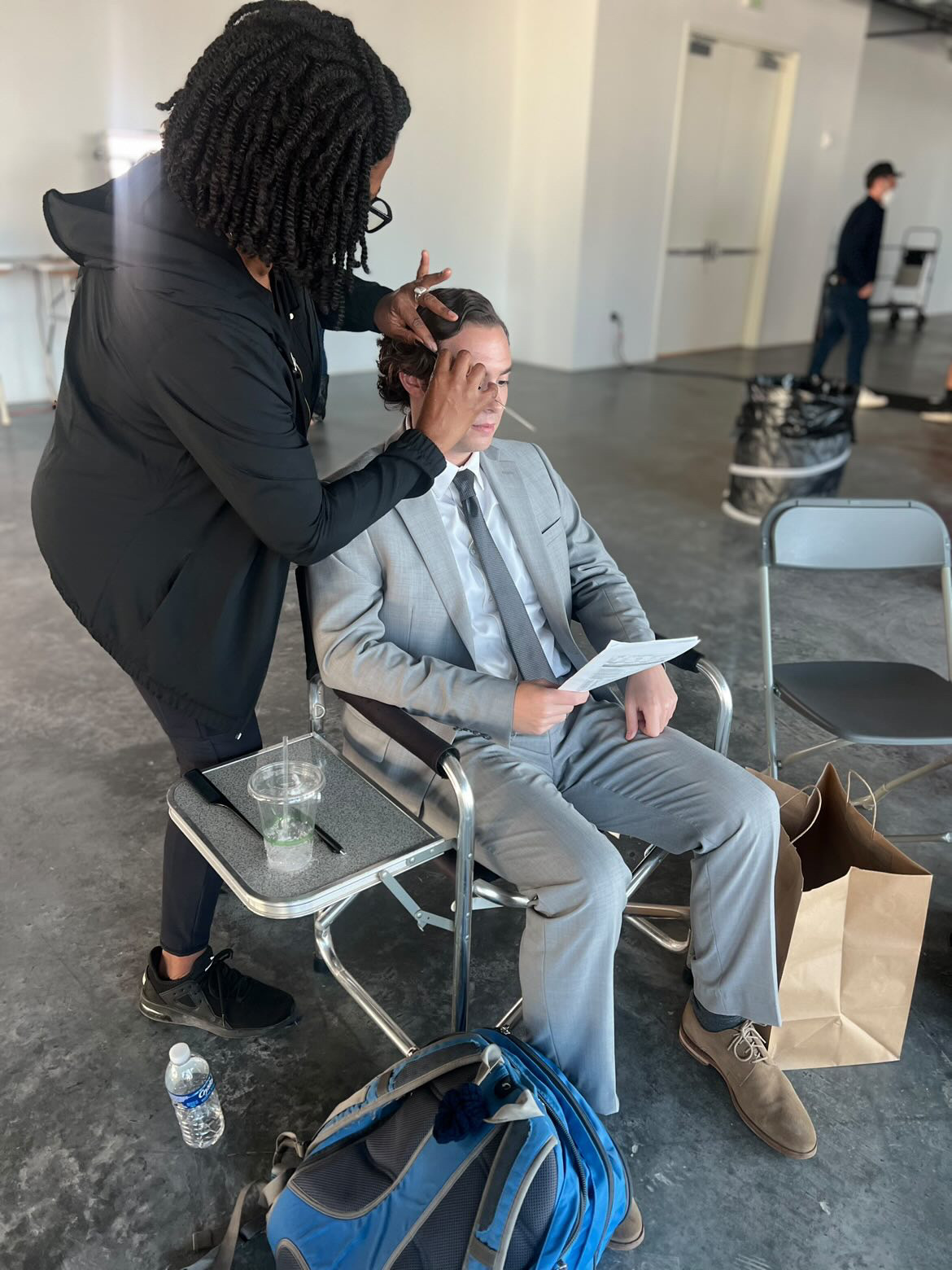
Quick word on "demo reel companies," because actors love to dunk on them: "they're all a scam" is lazy advice that leaves you powerless. I was recently on set for a friend's shoot at one of the companies everyone trashes — and the footage is going to be quality, because my friend picked the right vendor for a specific purpose: capturing a casting type he hadn't booked yet, which a normal self-tape couldn't show as well. The rule isn't "avoid all reel services." The rule is: do your research, hire the right vendor for the specific thing you need, and work on the right material. Specificity beats blanket dismissal every time — with reel companies, coaches, classes, all of it.
Common Mistakes I See Constantly
- Uploading a bad reel out of panic. No footage genuinely beats bad footage. A blurry, badly-lit, mumbled scene is a reason to pass, not a tiebreaker.
- Making it a "little of everything" montage. Blurs your type. Pick a lane.
- Waiting for permission. Sitting on zero footage for a year because you're "not ready" instead of shooting one scene this month.
- Assuming the reel is the reason you're not getting meetings. Often it isn't. More on that next.
Real Talk — The Reel Is Rarely the Actual Bottleneck
Here's the part most reel advice skips. When actors can't get agent meetings, they assume it's the footage. Usually it's the relationship gap.
My first year in LA, I had materials and I still got zero auditions — because I was submitting into the void and waiting. What flipped it wasn't a better reel. It was getting upstream of submission: researching who was casting what I wanted, finding the workshops and events those casting directors were actually teaching, and building relationships at the source. A reel gets opened differently when the person already knows you from the room.
And remember what a credit really does: one credit at the right level doesn't change what you can do — it changes what people believe you can do. After my Netflix film, casting offices started bringing me in for bigger conversations. Same actor, same ability. The proof just shifted the belief. Your first strong reel piece is a smaller version of that same lever.
The Upgrade Path (Where to Put Money as You Grow)
If I were reinvesting a first booking check — say a commercial pays you a few thousand — I would not spend it on rent (that's what your other income is for). I'd put it into materials: one great demo scene in the lane I want to grow, better headshots if mine are stale, coaching that pushes a specific skill. Reinvest and reinvest until the train is chugging. I'm literally doing a version of this right now, updating my own demo materials ahead of the late-July episodic season. The reel is never "done."
The Beginner Reel Checklist
Before you submit to a single agent, make sure you can say yes to these:
- [ ] I have at least one clean, well-lit, well-read scene on camera.
- [ ] That scene shows a specific, castable version of me — not "a bit of everything."
- [ ] The footage is good enough that it helps me, not hurts me (no reel > bad reel).
- [ ] I have a simple slate shot.
- [ ] My headshots and resume match the type the footage shows.
- [ ] I've done research on the agents I'm submitting to — I'm not just spraying submissions.
If you can't check the first three yet, your job this month isn't "get an agent." It's "shoot one good scene."
Common Questions Actors Ask (FAQs)
Do you need a reel to get an agent? (primary) Not always — plenty of actors sign off a strong self-tape, a live audition, or a referral. But you do need some proof you can act on camera, and a reel is the cleanest way to package it. The hard rule: no reel is better than a bad reel. Send one clean, specific scene over a sloppy montage every time. Can I use my self-tapes as reel footage? (hyper-niche) Yes. A strong self-tape is legitimate reel footage, especially early on. Casting and agents care whether the acting is good and the type is clear — not whether a scene came from a "real" production. Pick your best-lit, best-read self-taped scene and treat it as your anchor piece. Is a slate shot enough on Actors Access if I have no reel yet? (hyper-niche) A slate shot helps casting match a face and voice to your photo, so it's better than a totally empty profile — but it isn't a substitute for footage that proves you can act. Think of it as a bonus, not the main event. Prioritize getting one real scene up. Will a self-produced scene make me look amateur to agents? (hyper-niche) Only if it's produced badly. A well-shot, well-acted scene built for a specific casting purpose looks professional — and even working actors self-produce their best material because what they get cast in often doesn't showcase them. Amateur isn't "self-made." Amateur is "unclear, badly lit, no specific point."
Final Takeaway
You do not need a stacked reel of credits to get an agent. You need one honest, specific piece of proof that you can act on camera in a lane you actually play — and you need to make sure a missing reel isn't just covering for a missing relationship.
So don't panic-upload junk, and don't freeze for a year. Shoot one good scene. Position it around the version of you that's both strong and joyful to play. And build the rooms and relationships that make anyone actually press play on it.
The reel isn't the finish line. It's just your first piece of evidence. Go make one that tells the truth about what you can do.