
I Signed With an Agent and Got No Auditions: Is This Normal?
Zero. That was my audition count for my entire first year in LA.:
Not "fewer than I hoped." Zero. I'd done everything the advice says — moved to the big market, had reps submitting me, taped every short that crossed my desk. And every morning I checked my inbox like it owed me money. (It did not pay up.)
So if you signed with an agent, posted the happy announcement, and then watched weeks of nothing roll by — I'm not going to talk to you like something is broken.
Here's what you've probably already done. Re-read your contract. Drafted a check-in email twice and deleted it twice. Cycled through the only two villains available: first you, then your agent. None of it produced an audition — not because you picked the wrong villain, but because nobody told you what signing actually buys.
So let's do what I'd do with one of my mentees: walk the steps. What's normal, what your agent really does all day, and the exact emails I'd send during the quiet.
Yes — having an agent and no auditions is more normal than it feels, especially early. Signing with an agent is not a faucet you turned on. Your agent makes submissions — pitches built from your materials — and casting decides who gets invited to audition. That decision happens out of your sight, and the market has slow seasons no agent controls. The honest part: from the outside, you usually can't tell whether silence means "wrong fit" or "slow stretch." So don't guess. Work the parts you can control — audit the materials casting actually sees, send updates that make you easier to pitch, ask for a submission report without making it weird, and track your own numbers so your next decision runs on data instead of fear. This post walks each step, emails included.
Who This Is For
You signed in the last year or two and the silence is getting loud. You've typed "my agent is not getting me auditions" into a search bar at 1am. Or you're stuck somewhere between "is my agent ghosting me" and "should I leave my acting agent" and can't tell which question is the real one.
Quick context on who's talking: I'm a working actor with a manager and a Southeast agent, and credits that include a Netflix film and a Hulu series. I like my reps. And quiet stretches still exist at every level — which is exactly why this post is about what to do with them.
Breakdown vs. Submission: The Two Words You Need
What Your Agent Actually Does (And What They Can't)
Your agent's job is access plus advocacy. Bigger-project breakdowns go out to reps, and your agent picks the ones you genuinely fit and submits you. And a good agent does NOT submit you for everything. Reps protect their credibility with casting offices by only pitching actors the office will take seriously. So your agent is choosing which walls to throw you at. That's the job working — not the job failing.
What your agent can't do: force casting to say yes, or speed up a slow market. I graduated into an industry that shut down twice in three years. Sometimes the silence is the whole market, not your career.
And they can't fix your materials. That part is yours — it's where the steps start.
Step 1 — Audit What Casting Actually Sees
When your agent submits you, casting sees a package: headshot, resume, reel — usually through your Actors Access profile, which connects to the breakdown system reps submit through. That package makes your first impression in every pile, without you in the room. The invite decision happens on materials before talent ever enters the conversation — I broke that whole submission moment down in why actors don't get Netflix auditions.
So before blaming anyone, ask: would you invite this package in? Headshots that look like you this year. Footage that matches the rooms you're being pitched for. Profiles fully filled out. Materials are the first thing we rebuild with mentees inside The Working Actor's Blueprint, because no agent can reshoot your reel for you.
If the audit comes back clean — good. Now you have something worth emailing about.
Step 2 — The Check-In Email I'd Actually Send
There are two kinds of check-in emails. One asks your agent to explain the silence. The other hands them something new to pitch with. Only one makes you easier to sell. Here's how I'd phrase it:
Notice what it isn't. No "just checking in." No "why haven't I heard anything." Every line is a tool. That's a useful update — new footage, new training, new availability, a booking from any source. How often? I don't have a magic number, and anyone selling you one is guessing. My rule: reach out when there's something real to hand them — and use the quiet to make more of it.
Sometimes, though, you also want to know what's been going out. There's a professional way to ask.
Step 3 — How I'd Ask for a Submission Report (Without Making It Weird)
Some agents can give you a rundown of where you've been pitched — which projects, what role types, roughly when. That's a submission report. The asking matters more than the ask. If your email reads like an audit, your agent hears "prove you've been working." If it reads like you're building them better tools, the same request lands as professionalism. Here's how I'd phrase it:
Reading the answer: steady submissions with no invites points back to Step 1. Thin submissions could mean a slow season or a fit question — one report can't tell you which. So pair it with the one data source you fully own.
Step 4 — Track Your Own Data and Keep Building
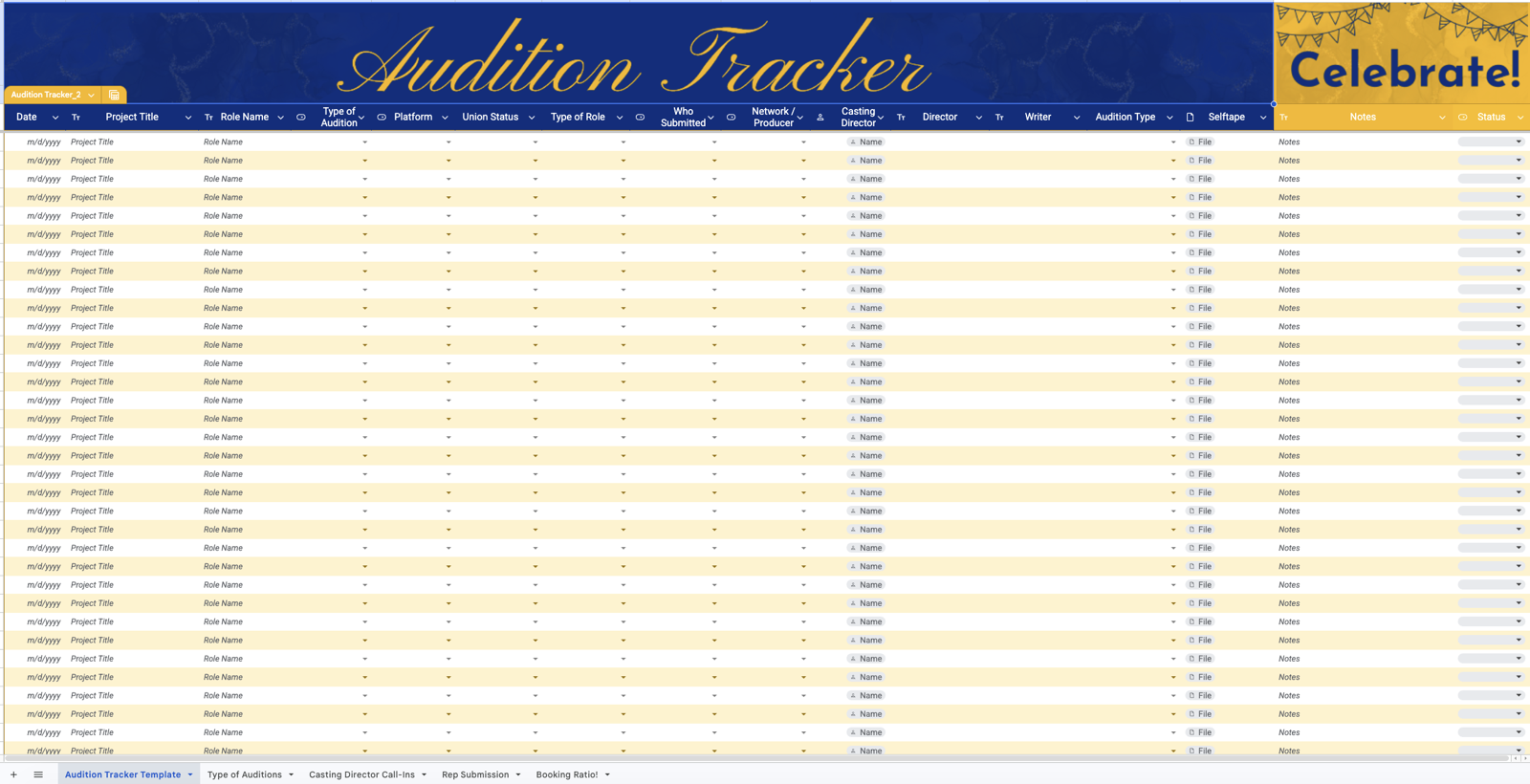
When my zero year finally flipped, it wasn't because I waited harder. I built a research engine — every show casting at the level I wanted, the casting offices attached, and the workshops and panels where those offices actually showed up. Then I went. By month six I was auditioning for the kind of projects I'd been targeting. (The full system is in how to get your first Netflix audition.)
Your version doesn't have to be mine. The point: actors who get through quiet seasons generate their own motion — and keep a record of what's actually happening.
The Misread That Costs Actors Years
One more recalibration — it changes how you read everything your agent does. A while back, one of my mentees auditioned for a reboot of a famous movie. The role wasn't quite him, but he taped anyway. Then his agent pushed casting to consider him for a different role in the same project — and casting said yes. He came into our session embarrassed. He'd read the whole thing as pity.
Walk through what actually happened. Casting offices are slammed — they don't hand out pity reads. An invite to read for another role is a yes. They think you're good. They just see you in a different shape than the original breakdown. And that push is the best thing your rep can do for you. Reps who push are reps in your corner. Actors who flinch at advocacy end up with years of nothing.
So if your "silent" agent suddenly pitches you sideways for a role you didn't expect: that's the machine working.
My Rule for the "Agent and No Auditions" Spiral

Here's the honest answer to "is my agent the problem": from the outside, you often can't know. You can't see the submission pile or the market's pace. Even now, I've had a casting office go quiet after an audition everyone loved. The not-knowing is built into this industry. What you CAN check:
- Do they answer you? Responsiveness to a professional check-in is visible. Submission volume isn't.
- Have you seen advocacy? A sideways pitch, a note about a project that almost happened — someone is pushing.
- Did Step 1 come back clean — honestly?
- What does your tracker show over time — motion, or a flat line?
(And if part of your 1am spiral is "is this agency even legitimate" — check whether it's SAG-franchised. That means the agency signed the union's agreement on commission caps and conduct standards. A baseline filter, not a performance review.)
If you've done all of it and everything still reads as silence over a long stretch, then "should I leave my acting agent" becomes a legitimate business question instead of a panic response. If you do move on, do it like a professional: a respectful conversation, gratitude for the time, no public drama. Leaving a rep isn't betrayal, and staying isn't weakness. It's two professionals deciding whether the partnership has data behind it.
Common Questions Actors Ask
Final Takeaway
The silence after signing feels like a verdict because you can't see anything moving. But a verdict and a quiet stretch look identical from your inbox — and only one of them is about you.
You have two choices. You can keep auditioning the two villains — you, then your agent — and let the inbox set your mood every morning… Or you can run the steps: audit the package, hand your agent new tools, ask with purpose, track what's real, and keep building like the work is coming.
My zero year wasn't a verdict. It was my starting data. Yours is too.